How to Choose the Right Kitchen Exhaust Fan for Your Cooking Needs
When it comes to creating a comfortable and functional kitchen environment, selecting the right kitchen exhaust fan is a crucial step that often goes unnoticed. A well-chosen kitchen exhaust fan not only enhances air quality by effectively removing smoke, steam, and odors produced during cooking but also contributes to the longevity of your kitchen appliances and surfaces. Understanding the various factors to consider can make a significant difference in how efficiently your kitchen operates and how pleasant it feels.
There are numerous models and features available on the market, making it challenging for homeowners to identify the best kitchen exhaust fan for their specific cooking needs. From ducted systems that vent air outside to ductless models that recycle air through filters, each option serves a particular purpose. Additionally, factors such as fan power, noise levels, and aesthetic design play a vital role in determining the right fit for your kitchen. This guide aims to provide essential insights and practical tips to help you navigate the selection process, ensuring that you choose a kitchen exhaust fan that meets not only your cooking style but also your overall kitchen ambiance.

Understanding the Importance of Kitchen Exhaust Fans for Cooking
Kitchen exhaust fans play a crucial role in maintaining a healthy cooking environment. In addition to removing smoke, steam, and cooking odors, these fans help eliminate airborne grease particles that can lead to respiratory issues and breathing discomfort. According to a report by the American Society of Heating, Refrigerating and Air-Conditioning Engineers (ASHRAE), effective ventilation can reduce indoor air pollutants by up to 50%. This is particularly important in kitchens, where high temperatures and various food preparations can contaminate air quality.
When choosing a kitchen exhaust fan, consider the size and layout of your kitchen. A fan with the appropriate CFM (cubic feet per minute) rating is essential to ensure adequate air exchange. For example, it is recommended that you have at least 15 air changes per hour in your kitchen for optimal performance. Additionally, a fan with sufficient capture and containment efficiency is vital for effectively drawing away cooking fumes.
Tips:
- Size Matters: Ensure that the exhaust fan is compatible with your kitchen dimensions and stove type.
- Ducted vs. Ductless: If possible, opt for a ducted system to vent outdoor air, which is more efficient in removing heat and humidity.
- Maintenance: Regularly clean the fan and filters to maintain its efficiency and prolong its lifespan.
Types of Kitchen Exhaust Fans: Which One Suits Your Needs?
When selecting a kitchen exhaust fan, it's crucial to understand the different types available to ensure you choose the one that best fits your cooking needs. The most common types of kitchen exhaust fans include range hoods, under-cabinet hoods, wall-mounted hoods, and downdraft systems. According to the U.S. Department of Energy, a well-ventilated kitchen can significantly improve indoor air quality, which is essential when cooking with gas or creating smoke from high-heat cooking methods. This emphasizes the importance of selecting a fan that not only fits your kitchen design but also effectively clears the air of grease, smoke, and odors.
Range hoods are particularly popular for their efficiency in capturing airborne particles from cooking. Studies indicate that a range hood with a high CFM (cubic feet per minute) rating is effective in removing pollutants. For instance, a hood rated between 300 to 600 CFM is generally suitable for most home kitchens, especially those with gas stoves. Under-cabinet hoods offer a sleek solution for smaller kitchens, while wall-mounted hoods can serve as a striking design element. Downdraft systems, although less common, may appeal to those with cooktops situated on an island, as they provide essential ventilation without obstructing sightlines. Considering these types and their functionalities can lead to a safer and more pleasant cooking environment.
How to Choose the Right Kitchen Exhaust Fan for Your Cooking Needs
| Type of Exhaust Fan |
Suction Power (CFM) |
Noise Level (dB) |
Ideal for Cooking Styles |
Installation Type |
| Under-Cabinet |
200 - 400 |
50 - 65 |
Light Cooking, Sautéing |
Wall-Mounted |
| Wall-Mounted |
300 - 600 |
55 - 70 |
Medium to Heavy Cooking |
Wall-Mounted |
| Island |
600 - 900 |
65 - 75 |
Grilling, Frying |
Ceiling-Mounted |
| Ductless |
100 - 300 |
45 - 60 |
Light Cooking, Small Spaces |
No Ducting Required |
| Downdraft |
200 - 500 |
50 - 68 |
Grilling, Frying |
Built Into Cooktop |
Key Factors to Consider When Choosing an Exhaust Fan
When selecting the right kitchen exhaust fan, several key factors should come into play to ensure you meet your cooking needs effectively. One of the primary considerations is the size of the fan. It is essential to match the exhaust fan's capacity to your kitchen size and the type of cooking you frequently do. A larger fan is typically required for commercial kitchens or those that produce significant smoke and odors, while a smaller, quieter model may suffice for light cooking activities.
Another crucial factor is the fan's CFM (cubic feet per minute) rating, which measures airflow. A higher CFM rating will offer better ventilation, especially when cooking methods generate more grease and steam. For optimal performance, aim for a fan that can replace the air in your kitchen at least 15 times per hour. Additionally, consider noise levels; if you prefer a quieter cooking environment, look for models designed for reduced noise operation.
Tips: Always check the fan's Sone rating if noise is a concern; lower Sone ratings indicate quieter fans. Moreover, consider the ease of installation and maintenance—some exhaust fans come with washable filters, which can significantly reduce upkeep. Lastly, assess your ductwork options, as ducted fans typically offer better efficiency compared to ductless ones. Choosing the right exhaust fan not only enhances your cooking experience but also contributes to a healthier kitchen environment.
Calculating the Required CFM for Your Kitchen Area
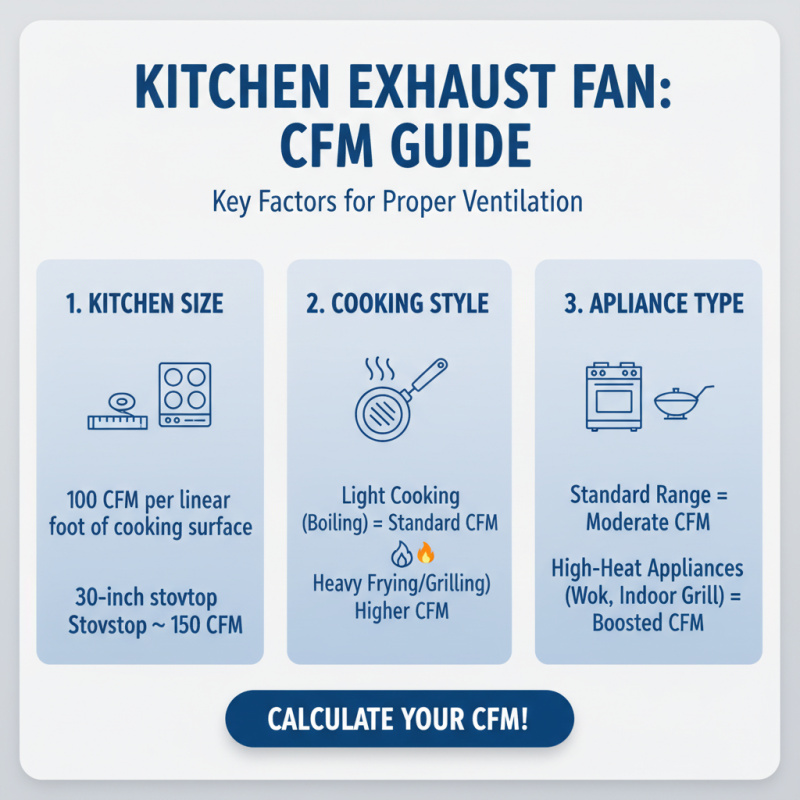
When selecting a kitchen exhaust fan, one of the most crucial factors to consider is the need for proper ventilation measured in cubic feet per minute (CFM). The required CFM for your kitchen area depends on three main factors: the size of the kitchen, the cooking style, and the types of appliances used. As a general rule of thumb, kitchens require about 100 CFM for every linear foot of the cooking surface. For instance, a 30-inch stovetop would necessitate around 150 CFM, while a more intensive environment with frying or grilling may require even higher values to efficiently eliminate smoke, odors, and heat.
It’s important to accurately calculate the CFM needed for your space; a common recommendation from industry experts is to use the formula: CFM = (Volume of Kitchen in Cubic Feet × 15) / 60. This will give you the ideal airflow necessary to maintain a clean and safe cooking environment. For an average kitchen measuring 15 feet by 10 feet with an 8-foot ceiling, the total volume would be 1200 cubic feet, leading to a requirement of approximately 300 CFM to ensure adequate ventilation.
Tips: Ensure that your kitchen exhaust fan is equipped with high-quality filters to trap grease and other particulates effectively. Also, consider a fan with variable speed settings, allowing you to adjust the ventilation according to the cooking activity. Lastly, installation height plays a significant role; mount the fan at the recommended height above your stovetop, typically between 24 to 30 inches, to achieve optimal performance.
Maintenance Tips for Keeping Your Exhaust Fan Efficient
Maintaining your kitchen exhaust fan is crucial for ensuring optimal performance and efficiency. According to the U.S. Environmental Protection Agency, proper ventilation can reduce indoor air pollutants by up to 60%. Regular maintenance helps sustain this effectiveness, promoting a healthier cooking environment. Ensure the fan filters are cleaned or replaced every month to prevent clogging, which can significantly diminish the fan's ability to expel smoke and odors. A study from the Home Ventilating Institute shows that dirty filters can lead to energy inefficiency, potentially increasing energy costs by as much as 30%.
Additionally, cleaning the fan blades and motor at least twice a year is vital. Dust and grease accumulation can restrict airflow and cause the fan to work harder, leading to premature wear or even failure. Using a soft brush and mild detergent can effectively remove stubborn grime without damaging components. Moreover, regularly inspect the exhaust duct for blockages or leaks since a clear duct ensures that air flows freely and reduces strain on the fan itself. According to a report by the American Society of Heating, Refrigerating and Air-Conditioning Engineers, maintaining clear ducts can enhance overall system efficiency, providing better air quality and energy savings in the long run.